
Wells Fargo’s co-led the funding round likely foreshadowing another recordkeeping deal along the lines of Morgan Stanley, Voya Financial and BNY Mellon.
Vestwell just raised $70 million in fresh venture capital, after tripling in the past year the number of retirement plans it shepherds for administration, compliance, recordkeeping and trust and custody.
The New York City statrtup has now raised $112.5 million from outsiders after white labeling its software to giants like Morgan Stanley, BNY Mellon and Voya Financial, formerly ING U.S.
It’s still counting the days until it turns a profit, but sees light at the end of the tunnel.
“We have a very clear path to profitability, with incredible partners and a focus on continuing to invest in the platform to mature, expand and enhance what our partners and their clients want,” says Vestwell founder and CEO Aaron Schumm through a company spokesperson.
Yet Vestwell needs big volume because fees start at just $100 per month and $6 per plan, which is $1200 annually + employee fees. Its new manged account offering can bolster its margins.
Vestwell is endeavoring on a big mission with lofty goals,” he adds. “The platform, and industry for that matter, is wide and complex.
“This investment ensures we won’t be held back.”
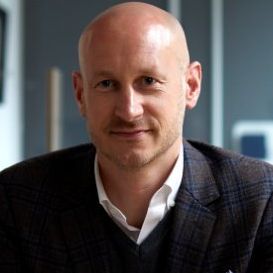
Vestwell’s ability to modernize 401(k) technology many saw as almost too obsolete to tackle means it has room to run, particularly with legacy companies with antiquated proprietary systems, says Lex Sokolin, global fintech co-head at New York City blockchain software company ConsenSys, via email.
“This is a very large space with outdated technology that is far behind on both user experience and data integration. Businesses continued to need to provide 401(k) services to their employees in a remote world, [which] helps the secular thesis for Vestwell.”
Bigs Reup
Wells Fargo Strategic Capital and Fin Venture Capital co-led the round, in which nine previous investors re-upped, including Goldman Sachs. Seven new investors also joined the round, including Morgan Stanley and Northwestern Mutual*.
“The fact that our peers are instilling their confidence in us to help define their future is both humbling and thrilling,” says Schumm, in a release.
Schumm’s equity dilution was limited because the company’s value is also “a healthy step up from [its] last round,” Schumm told Business Insider.
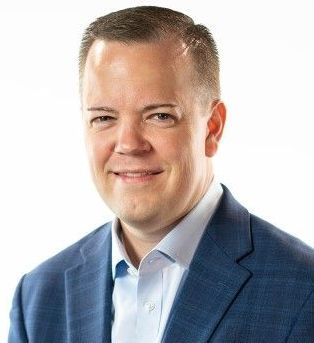
Healthy demand for the private shares has industry giants “clamoring to get a piece,”writes Brad Svrluga, general partner at Primary Venture Partners, in a June 20 Medium article. Primary has invested in all four of Vestwell’s fundraising rounds.
Vestwell raised $30 million in 2019 from a slew of investors, including Goldman Sachs, which led the company’s Series B round. See: Aaron Schumm is in the catbird seat after the biggest cat in the Wall Street jungle, Goldman Sachs, validates Vestwell by taking a big bite of a new $30 million funding round.
Out of Vestwell’s nine Series B backers, only Franklin Templeton and BNY Mellon declined to re-up their investment. Neither firm has responded to a request for comment.
Goldman Sachs declined to comment, and Wells Fargo and Morgan Stanley did not respond.
All a clamor
Schumm has ambitious plans to hire new staff to its current 140 headcount. That’s up from 60 last year and is expected to hit more than 200 by year end.
The CEO says the company is focusing on software engineering and product development, platform functionality and client servicing.
“As we grow our client base exponentially, we want to ensure our client experience only gets better, so we’ll continue investing in both people and tools to provide excellence in service,” he says.
Put simply, Vestwell needed to grow its service capacity to keep up with demand, and this likely drove the raise, says Aaron Klein, CEO of Auburn, Calif., risk management vendor Riskalyze, via email.
“[It’s] definitely growth-driven … and it’s a testament to their differentiated technology,” he says.
Indeed, Vestwell has been on a five-year growth tear, since its founding in 2016.
In the past 12 months it has near doubled its headcount to 140, and grown the number of retirement plans under its administration by 200%, according to the firm.
Vestwell’s original 401(k) TAMP model for RIAs is also growing at a rate of roughly 108 new RIA clients per year. Last year, it had 425 RIAs under contract, up from 100 RIAs and 4,300 advisors in 2018.
“Firms like Strategic Retirement Partners, Pensionmark, and others, have turned to Vestwell to not only help scale, but also add invaluable services like our newly launched advisor managed account offering,” Schumm says.
Small business boon
“What started as a very broad 401(k) platform has rapidly found focus as an engine to drive workplace retirement plans,” he says.
“So many of the next-generation HR systems are relying on Vestwell to run their retirement plans,” he adds.
The Vestwell move to make recordkeeping cheaper and less clunky impresses Wells Fargo, says Tom Richardson, head of principal technology investments at Wells Fargo Strategic Capital, in a release linked to Vestwell’s Series C raise.
“There are more than 31 million small businesses in the US, and many have historically experienced challenges in providing retirement benefits … due to the administrative burden and high costs,” he explains.
“Vestwell’s modern, automated, and user-friendly platform uniquely positions them,” he adds.
Back-scratching expertise
Vestwell’s latest raise may cross-pollinate to the client side of Wells Fargo.
The San Francisco banking and brokerage giant is already in discussions with Vestwell about renting its software, according to Business Insider.
“There’s a lot going on behind the scenes from a commercial standpoint … [but] enterprise deals are not something that you flip a switch and you’re good to go,” Schumm told the trade paper.
In its partnership with Morgan Stanley Vestwell will provide digital retirement record keeping services for its legion of reps.
Vestwell already administers a portion of BNY Mellon’s managed 401(k), 403(b), and employer-sponsored IRA plans, and the pair have jointly bid for the business of state-led IRA savings programs.
Beta stage gains
They secured their first state contract from the State of Oregon last December, beating out Ascensus. See: Vestwell is in and Ascensus is out in Oregon as mushrooming ‘force-function’ state retirement plans spark heated bids to recordkeep; RIAs are angling for a cut, too
Today, the two firms administer more than 17,000 small business plans on behalf of Oregon, despite the program only reaching its beta stage, Schumm told BusinessInsider.
BNY Mellon, which partnered with Vestwell in Dec. 2018, invested in its Apr. 2019 Series B. Franklin Templeton, another Series B investor, partnered with Vestwell in Jan. 2021 to launch a 20-basis-point managed accounts service for 401(k) providers of all stripes.
In addition to its efforts to grow in its core 401(k) market, which accounts for roughly $7 trillion in domestic assets, Vestwell is also bidding for a greater slice of the 529, HSA, IRA and emergency savings markets, according to the release linked to the company’s latest raise.
“We’ll far exceed our 2020 growth metrics with no ceiling in sight,” says Schumm. “We are in a fortunate position where we don’t have to chase growth. It’s driving toward us.”
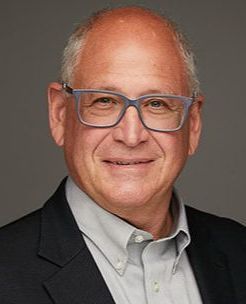
It’s a good time to re-up the kitty, agrees Joel Bruckenstein, founder of the T3 Conferences, via email.
“One would assume … [Vestwell] needs capital to further its growth objectives. This is a good time to raise cash, while it’s readily available,” he explains.
Tom Richardson from Wells Fargo Strategic Capital has joined the board. Logan Allin from Fin Venture Capital is an active observer and will be working directly with Schumm, a longtime friend, according to Allin’s LinkedIn page.
“We’ll be naming one more independent board member soon,” Schumm adds.
Cracking the market
When Vestwell moved to sell turnkey 401(k) services direct to payroll providers in May 2018, it did so to become a B2B vendor to client facing companies.

That gave it access to an estimated 40 million American workers have no retirement plan, in part, because only 49% of employers with less than 50 staffers offer one, according to Boston-based Cerulli Associates.
In contrast, 69% of companies with less than 100 employees have a retirement plan. . See: Vestwell makes hard-charging payroll startup, Namely, its portal to win plan sponsors for RIAs and IBD reps it services.
Today, Vestwell also partners with payroll providers such as Toast, QuickBooks, Payroll, ADP and Namely, according to its website.
The company says its partnership with QuickBooks Payroll gives it greater access to a significant SMB population, as well as the accountants who service them.
An exclusive partnership with Toast, a restaurant point of sale and management system, has been a boost for restaurants struggling to recruit and retain talent.
With the addition of companies like CorPay and Payroll Service Solutions, the company’s partnership roster now tops 20 firms, Schumm says.
State mandates
Vestwell also got a boost from a number of states that now require employers to provide access to workplace retirement plans — a shift in policy that has left Vestwell in a sweet spot.
Companies eager for an alternative to enrolling employees onto a state run IRA have become a ready market. See: 401(k) industry howls as DOL lets state governments become DC providers with advantageous exemptions.
State requirements — and tax credits — are indeed driving demand for cheap, simple, defined-contribution plans, says Jason Roberts, CEO of Pension Resources Institute of San Diego, in an email.
“State mandated IRA programs are driving a lot of start-up plans towards low-cost providers that can streamline the onboarding process through online tools and resources. New and expanded tax credits are likely fueling adoption of new plans, too,” he explains.
“When the Oregon saves program goes live in the next couple of months, we’ll be overseeing well over 20,000 small businesses using Vestwell’s technology and 170K employees,” Schumm says.
Selling the basics
Adoption of its workplace offering also continues to surge. See: Vestwell jets ahead and adds pilots on the fly to keep startup on course.
“Workplace is our most popular solution for “starter” plans that are setting up their retirement plan for the first time. About 50% of our plans use the workplace model, or its equivalent in exclusive partnerships,” Schumm says.
In May 2018, Vestwell had also yet to catch a plan valued at more than $50 million — the hunting ground of companies like Boston-based 401(k) giant Fidelity Investments.
Fidelity has taken part in each of Vestwell’s funding rounds through F-Prime Capital. See: As Aaron Schumm’s 401(k) startup gets $8 million the FolioDynamix founder loves Vestwell’s odd juxtaposition to Fidelity.
By April 2020, Vestwell’s software and services supported 7,000 plan sponsors.
Vestwell administers 1,000 plans, many of them above $50 million in value, although 95% remained sub $25 million.
“The core focus is on the $0 to $10 million plan space,” says Schumm.
“Ultimately we want to be the single place for every employee’s next best dollar in workplace saving, which opens up the entire $35 trillion-plus market.”
How it works
Vestwell’s software connects plan participants and plan sponsors with advisors at RIAs, banks, insurers and broker-dealers. It allows advisors to create, sell and manage retirement plans. See: Two years after the $199 million FolioDynamix sale, Aaron Schumm jumps back in the B2B RIA game but not to compete — yet
Additionally, Vestwell operates as a 3(38) investment manager, a 3(21) fiduciary advisor that “can give advice but not make recommendations.” It also handles 3(16) fiduciary duties ensuring fees are aligned and that 5500 tax reporting is in place, and it acts as a third-party administrator.
Form 5500 is used to file an employee benefit plan’s annual information return with the Department of Labor. See: How Schwab is gearing up its RIAs to fight for 401(k) assets.
*In full, Vestwell’s latest backers include Wells Fargo, Fin Venture, Goldman, Morgan Stanley, Manulife, Point72, Nationwide Ventures, Allianz Life Ventures, Northwestern Mutual, FinTech Collective, Greenspring Associates, Primary, Teamworthy Ventures, F-Prime Capital, Industry Ventures, and Commerce Ventures.